Call for Applications: 2026 Joel A. Tarr Envirotech Article Prize

In association with SHOT, Envirotech has established the Joel A. Tarr Envirotech Prize to recognize the best article, published in either a journal or edited volume, on the relationship between technology and the environment in history. The prize is named in honor of the eminent U.S. historian of urban environments and technologies Joel A. Tarr.

Awarded roughly every eighteen months (alternating between SHOT and ASEH conferences), the prize recognizes innovative publications that explore new ways of thinking about the interplay between technological systems and the natural environment. Early-career scholars and graduate students are especially encouraged to submit their publications. Articles may be submitted in any language; however, for articles not written in English, the applicant will need to provide a translation.

To be eligible for this prize, the article must have been published in a journal or an article collection between January 1, 2025, and June 30, 2026. Submissions can be final page proofs in lieu of the published PDF, if needed.

The winner of the 2026 Joel A. Tarr Envirotech Prize will be announced around the SHOT 2026 conference (held virtually).

To apply, please attach your article and a brief curriculum vitae (a one-page PDF file) to this form by July 1, 2026.

Please contact co-convenors Boyd Ruamcharoen (bruamcharoen@fas.harvard.edu) and Ramya Swayamprakash (swayampr@gvsu.edu) with any submission related issues.

Call for Applications: 2025 Joel A. Tarr Envirotech Article Prize

Envirotech, a special interest group within the Society for the History of Technology and the American Society for Environmental History, invites nominations for the 2025 Joel A. Tarr Envirotech Article Prize. The Tarr Prize recognizes innovative publications that explore new ways of thinking about the interplay between technological systems and the natural environment.

To be eligible for this prize, the article must have been published in a journal or an article collection between January 1, 2023, and December 31, 2024. Early career scholars are especially encouraged to submit their publications. Articles may be submitted in any language; however, for articles not written in English, the applicant will need to provide a two-paragraph summary in English in addition to the original article. 

The 2025 Joel A. Tarr Article Prize will be awarded at the 2025 ASEH meeting in Pittsburgh. 

To apply, send your article and a brief curriculum vitae (a one-page PDF file) to committee chairperson Tom Zeller at tzeller@umd.eduThe deadline for nominations is January 15, 2025. 

For more information and previous winners, see here.

Call for Applications: 2023 Joel A. Tarr Envirotech Article Prize

Envirotech, a special interest group within the Society for the History of Technology and the American Society for Environmental History, invites nominations for the 2023 Joel A. Tarr Envirotech Article Prize. The Tarr Prize recognizes innovative publications that explore new ways of thinking about the interplay between technological systems and the natural environment.

To be eligible for this prize, the article must have been published in a journal or an article collection between January 1, 2021, and December 31, 2022. Early career scholars are especially encouraged to submit their publications. Articles may be submitted in any language; however, for articles not written in English, the applicant will need to provide a two-paragraph summary in English in addition to the original article. 

The 2023 Joel A. Tarr Article Prize will be awarded at the 2025 ASEH meeting in Pittsburgh. 

To apply, send your article and a brief curriculum vitae (a one-page PDF file) to committee chairperson Dolly Jørgensen at dolly.jorgensen@uis.noThe deadline for nominations is December 1, 2024. 

For more information and previous winners, see here.

2021 Tarr Envirotech Article Prize awarded to Bill Rankin’s “The Accuracy Trap”

The selection committee for the Joel Tarr Envirotech Article Prize is pleased to announce this year’s winner:

Bill Rankin, “The Accuracy Trap: The Values and Meaning of Algorithmic Mapping, from Mineral Extraction to Climate Change,” Environment and History (published online August 23, 2020), https://doi.org/10.3197/096734020X15900760737275.

How are environmental maps created, and what do they mean? Bill Rankin’s compelling article focuses on a fundamental but easily overlooked component of environmental mapping: the underlying algorithm. Weaving together insights from environmental history, visual studies, and critical cartography, Rankin traces the development and spread of now-ubiquitous mapping algorithms from their Cold War origins in the fields of mineral extraction (in postcolonial Africa) and military weather forecasting (in the USSR). Although their use was limited at first, such algorithms sparked intense philosophical disagreement among specialists over the goals of environmental visualization – between what Rankin calls accuracy and realism. However, epistemological tensions around the purpose of visualization have largely been forgotten as advances in computing made algorithms more accessible to non-specialists. In an increasing retreat from human subjectivity, mapping has become a technique of data-processing, hollowing out the meaning of accuracy. By probing the limits and possibilities of accuracy in environmental mapping, Rankin offers a welcome reminder of the contingent and contested nature of visual representation, and a model for linking the histories of environment and technology to questions of epistemology and visual culture.

Tarr Prize Selection Committee:
Camille Cole, University of Cambridge
David Fedman, University of California-Irvine
Aristotle Tympas, University of Athens

Envirotech 2021 Spring Meeting and Roundtable: “Beyond the Boundary”

On April 26, 2021, from 12 noon-2pm EST, as part of the American Society for Environmental History’s Environmental History Week, Envirotech will hold its annual spring meeting including a roundtable discussion of the past, present, and future of scholarship at the intersection of the histories of environment and technology.

The first hour of the meeting (12 noon-1pm) will be a virtual version of our usual “breakfast” meetings at the annual meetings of ASEH and the Society for the History of Technology. It will include a round of introductions, announcements, and discussion of Envirotech business.

The second hour of the meeting (1-2pm) will feature comments from the following panelists followed by an open discussion:

  • Johan Gärdebo (Linköping University)
  • Ann Norton Greene (University of Pennsylvania)
  • Aleksandra Kobiljski (CNRS/EHESS)
  • Taylor Moore (UC Santa Barbara)
  • Sara Pritchard (Cornell University)

The meeting will take place via Zoom and registration at the following link is required: https://upenn.zoom.us/meeting/register/tJIvdumorDssEtH7PTTxYLjnK1AlM3ul_DVR

We hope to see you there!

Call for 2021 Joel A. Tarr Envirotech Article Prize

Envirotech, a special interest group within the Society for the History of Technology and the American Society for Environmental History, invites nominations for the 2021 Joel A. Tarr Envirotech Article Prize. The Tarr Prize recognizes innovative publications that explore new ways of thinking about the interplay between technological systems and the natural environment.

To be eligible for this prize, the article must have been published in a journal or article collection between April 1, 2019, and December 31, 2020. Younger scholars are especially encouraged to submit their publications. Articles may be submitted in any language; however, for articles not written in English, the applicant will need to provide a translation. 

The next Joel A. Tarr Article Prize will be awarded at an Envirotech event during Environmental History Week (April 19-26, 2021). 

To apply, send your article and a brief curriculum vitae (a one-page PDF file) to envirotechhistory@gmail.com. The deadline for nominations is March 1, 2021. The winner of the prize will be notified in April.

For more information and previous winners, see here.

Envirotech Communications Fellowship

In light of the virtualization of our interactions over the coming year, the Envirotech SIG invites applications from graduate students, recent PhDs (within three years), and independent scholars for the position of Envirotech Communications Fellow for the 2020-2021 academic year (August-June).

The fellowship includes an honorarium of $800 and entails maintaining the Envirotech website and Twitter account and possibly assisting with the organization of virtual panels and other online events, in collaboration with the Envirotech conveners. Experience with WordPress is helpful but not required.

We anticipate a time commitment of 1-2 hours per week over the 2020-2021 academic year. Applicants should send a CV and brief statement of interest to ebenson@upenn.edu and jpbaeten@iu.edu. Application deadline is July 15, 2020.

Envirotech Travel Award for ASEH 2020 in Ottawa

The Envirotech Special Interest Group is pleased to announce the Joy Parr Envirotech Travel Award for the upcoming American Society for Environmental History conference.

The Joy Parr Envirotech travel award is a grant of $400 toward the costs of attending the annual meetings of the American Society for Environmental History (ASEH) and the Society for the History of Technology (SHOT). The award is named in honor of the eminent Canadian historian of work, gender, and technology Joy Parr.

Eligibility for the award is limited to those presenting a paper or poster at the meeting addressing the interrelated histories of environment and technology. The grant is available to current graduate students, recent PhDs (within the past three years) and independent scholars. The winner will receive a check for $400 at the Envirotech breakfast meeting at the conference.

Applicants should complete the linked questionnaire and email it along with a 1-page CV to envirotechtravelaward@gmail.com.

Applications for the travel grant for the upcoming ASEH conference in Ottawa, Canada, from March 25-29, 2020, are due by January 31, 2020. The applicant selected for the award will be notified by mid-February.

Any questions can be sent to Envirotech co-conveners Etienne Benson and John Baeten at the above email address. For more information about Envirotech, visit our website at http://envirotechhistory.org/

Meeting Report: Envirotech in Milan 2019

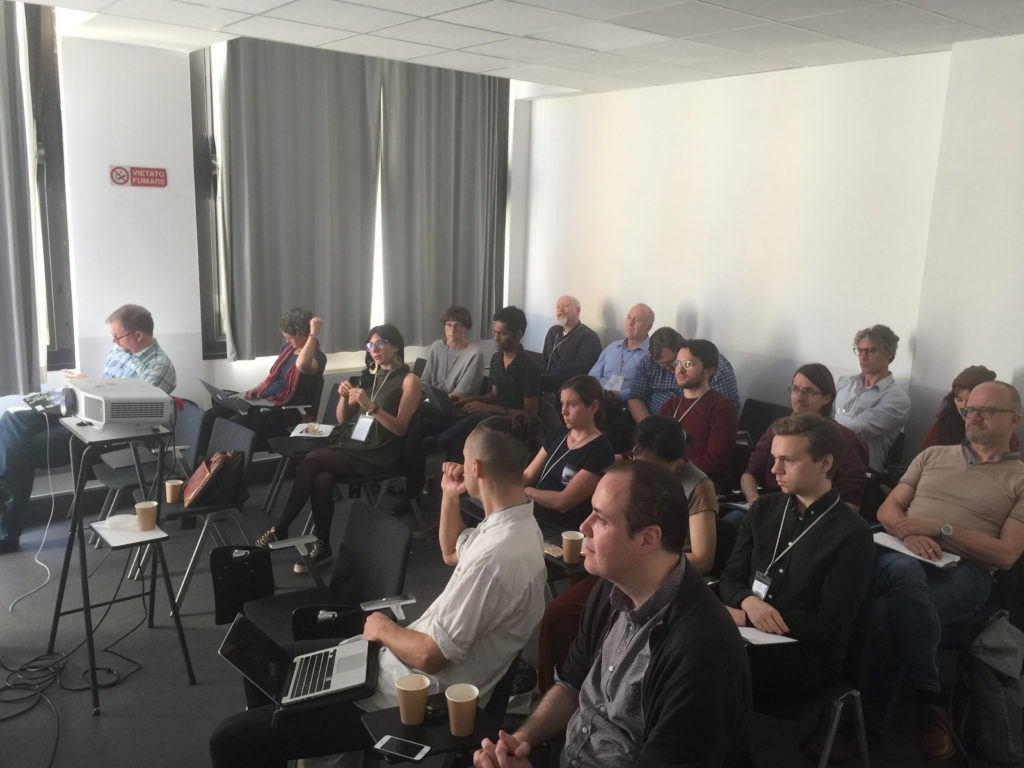
Lesser scholars might be stymied by coffee shortages and unlighted rooms, but not Envirotechies, who powered through some logistical challenges in Milan to gather both for the traditional Saturday morning breakfast and for a special Envirotech SIG Sunday Workshop. Mille grazie to Kellen Backer and Aleksandra Kobiljski for stepping up, in the absence of the SIG’s official conveners, to ensure that the breakfast and workshop went off smoothly.

At the Saturday breakfast, in addition to the usual round of introductions and passing of the hat, two awards were announced. The Joy Parr Travel Award was given to Nicole Welk-Joerger, who presented a paper at the conference on “Safety by Design: Silo Design in Twentieth-Century United States.” The Joel Tarr Article Prize was given to David Fedman for his article on ““The Ondol Problem and the Politics of Forest Conservation in Colonial Korea.” (Click here for the full Tarr award citation.)

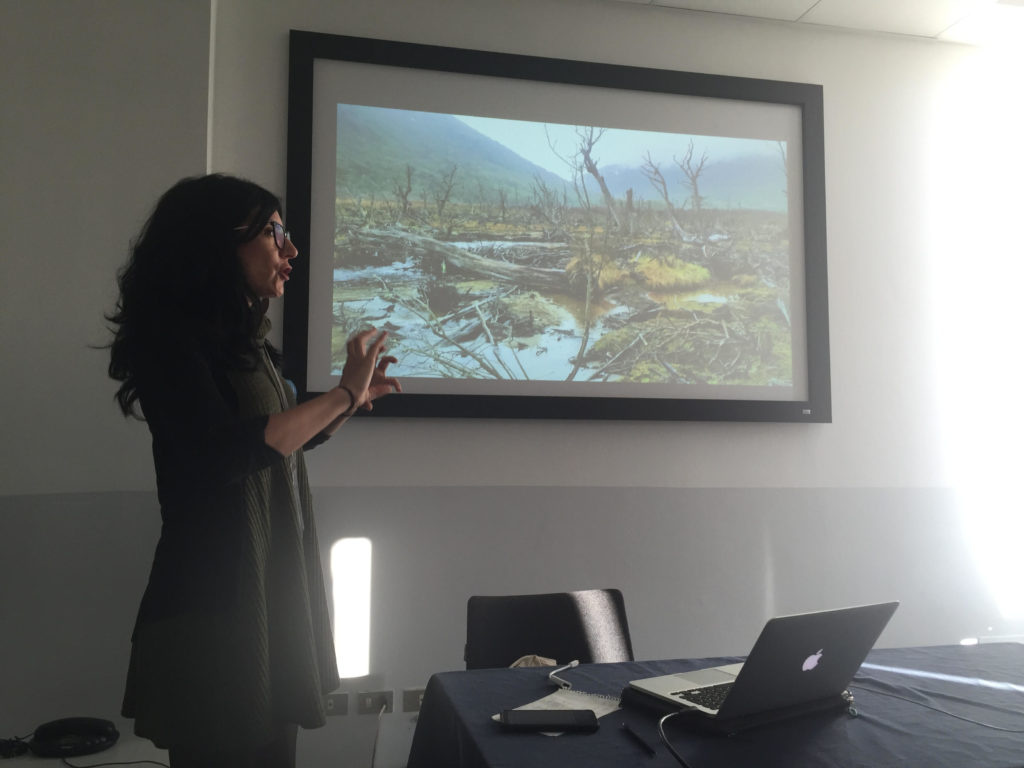
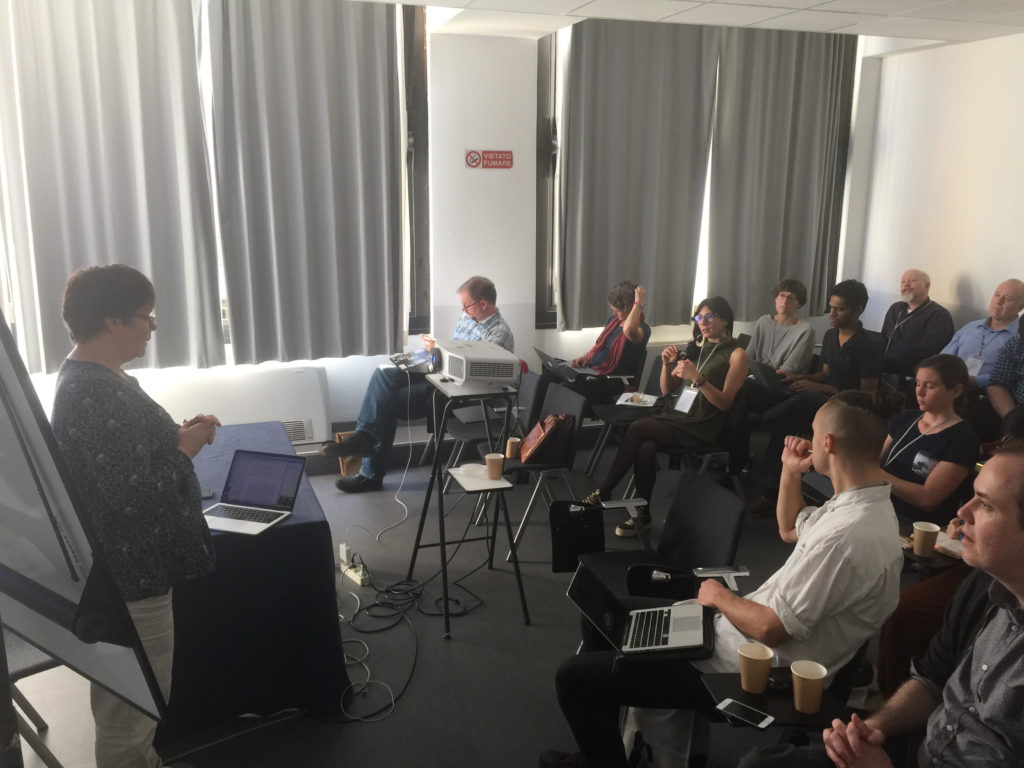
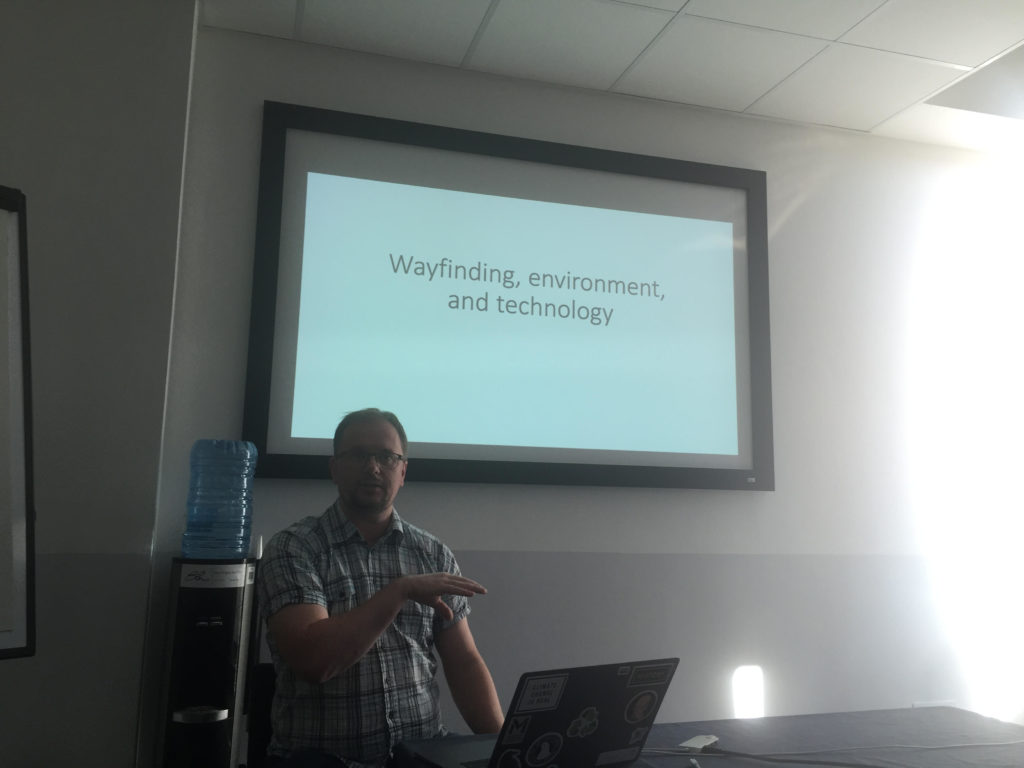
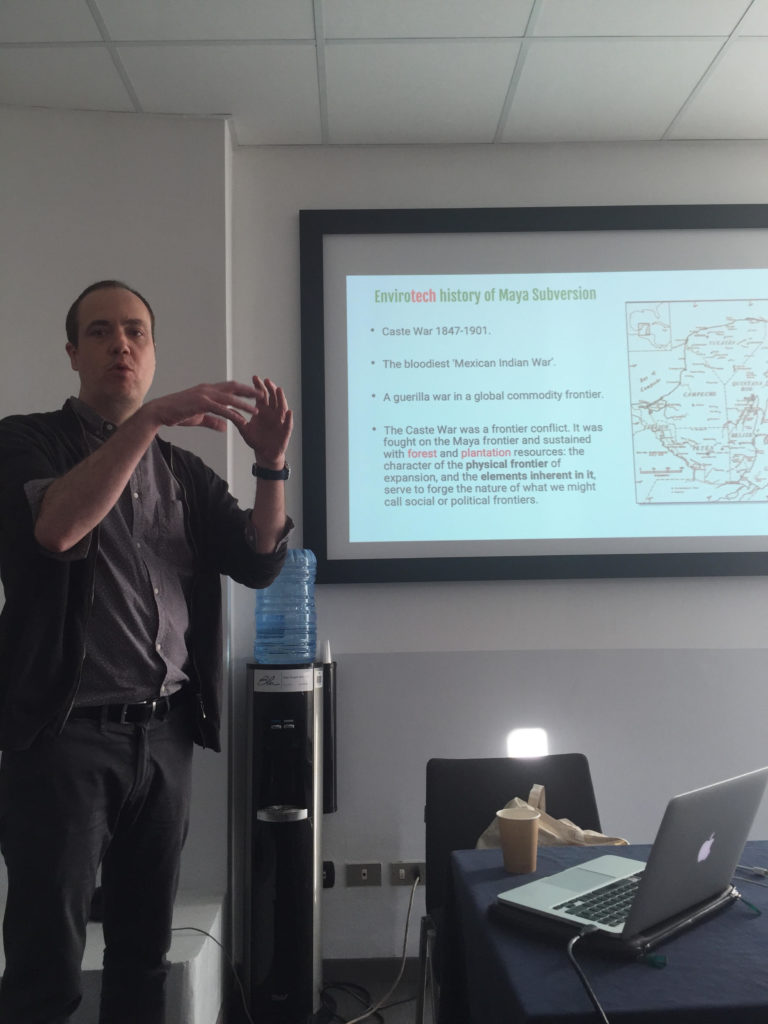
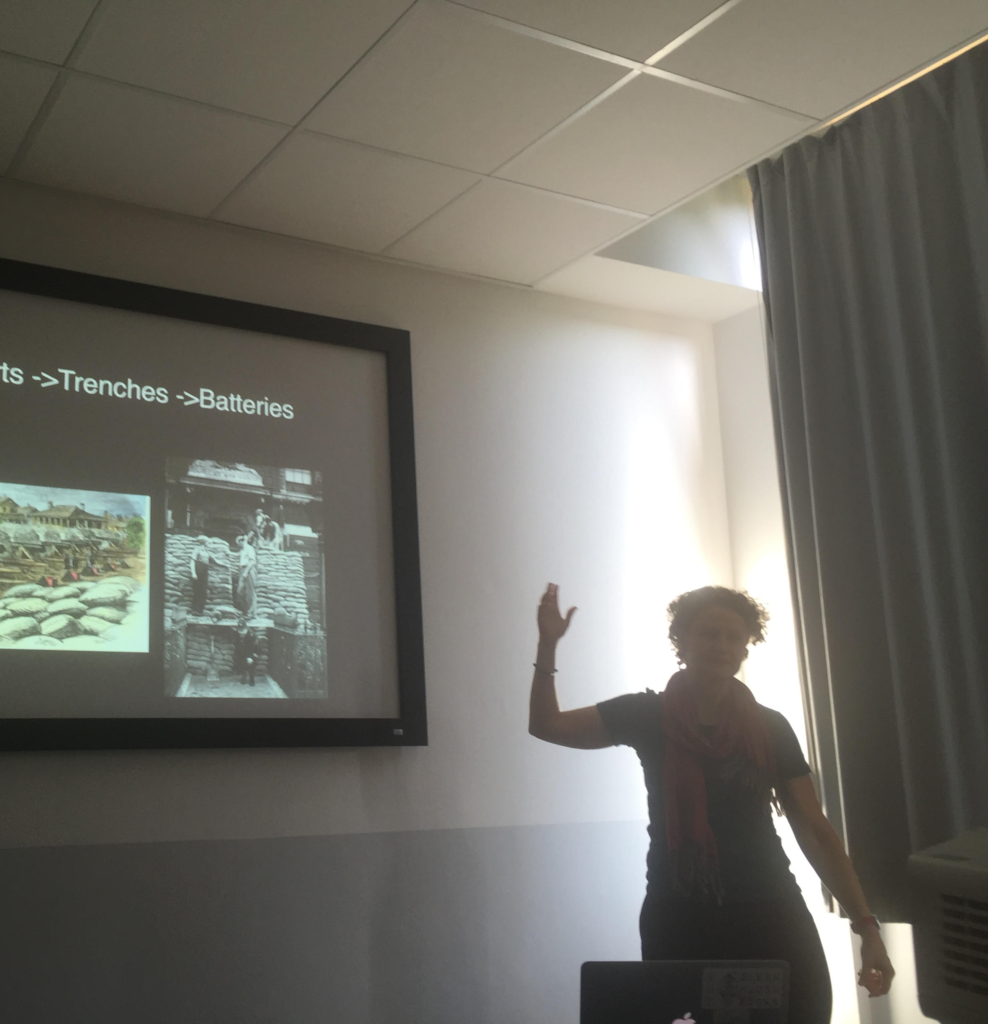
The Sunday workshop featured a series of lightning presentations by Mara Dicenta, Johan Gärdebo, Dolly Jørgensen, Finn Arne Jørgensen, David Pretel, Jenny Leigh Smith, and Eric Hardy. Presentations were followed by a discussion about how to broaden Envirotech’s reach, improve communication, and facilitate participation by those who aren’t able to attend SHOT or ASEH meetings in person — all things we will be working on as Envirotech enters its 20th year. (Our new Twitter account is a first small step).

Click here for the full Sunday workshop program, and see below for a few snapshots from the event.